

What Is EEAT?
Google’s search algorithm has evolved far beyond simple keyword matching. Today, ranking on Google depends on creating content that is useful, trustworthy, and written by knowledgeable people.
This is where EEAT plays an important role.
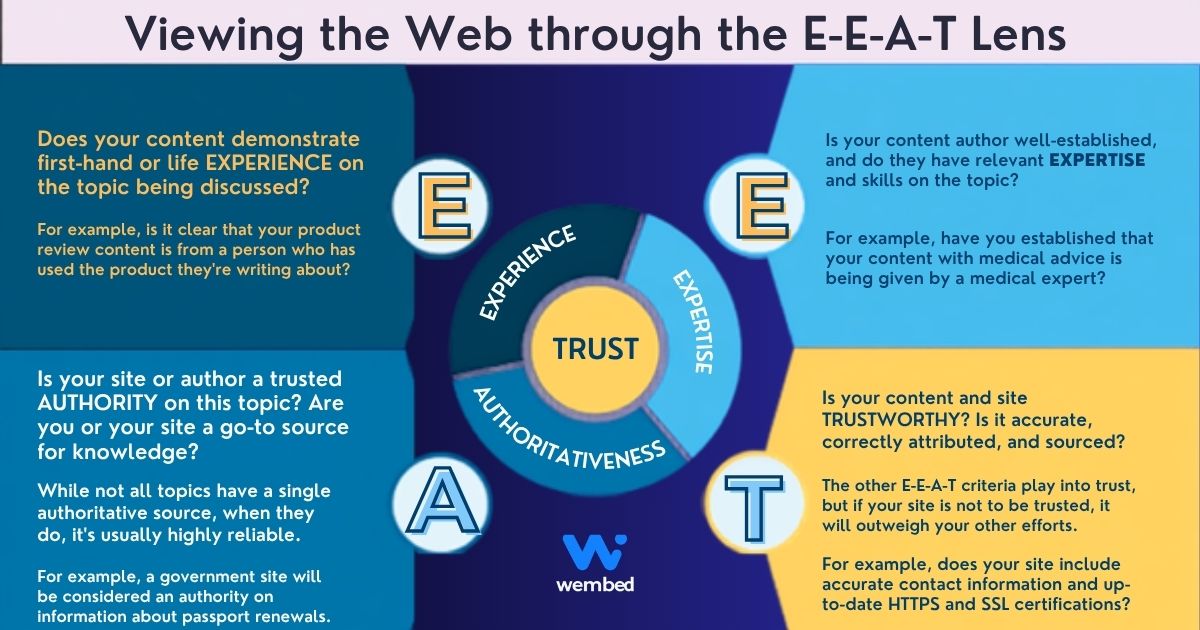
EEAT stands for Experience, Expertise, Authoritativeness, and Trustworthiness. These four principles are described in Google’s Search Quality Evaluator Guidelines and help assess whether content is reliable and valuable for users.
While EEAT is not a direct ranking factor, websites that consistently demonstrate these qualities are more likely to earn user trust and perform well in search results over time.
Quick Answer
EEAT stands for Experience, Expertise, Authoritativeness, and Trustworthiness. It is Google’s framework for evaluating the quality and credibility of content. Websites that provide accurate, helpful, and trustworthy information while demonstrating real experience are more likely to succeed in modern search.
Why Is EEAT Important?
Google’s primary goal is to deliver the most helpful answer for every search.
People depend on Google to make important decisions about health, finance, education, technology, and business. Because of this, Google wants to reward websites that publish accurate information and build trust with their audience.
Strong EEAT helps websites:
- Build user confidence
- Improve brand reputation
- Increase engagement
- Earn quality backlinks
- Support long-term SEO growth
- Improve visibility in AI-powered search experiences
Instead of focusing only on keywords, Google increasingly evaluates whether users can trust the information on your website.
Understanding the Four Elements of EEAT
Experience
Experience refers to first-hand knowledge of a topic.
Google values content written by people who have actually used a product, visited a place, completed a project, or solved a real problem.
For example, a review written after using a laptop for three months provides more value than a review based only on the product description.
How to Show Experience
- Share personal case studies.
- Include original screenshots and images.
- Describe real projects.
- Explain lessons learned from practical work.
- Write from first-hand knowledge whenever possible.
Expertise
Expertise measures how knowledgeable the content creator is about a topic.
Expertise doesn’t always require a formal degree. It means your content demonstrates a deep understanding of the subject and provides accurate, well-explained information.
How to Build Expertise
- Publish detailed guides.
- Research topics thoroughly.
- Keep information updated.
- Explain technical concepts in simple language.
- Answer common user questions clearly.
Authoritativeness
Authority is about reputation.
Google looks at whether your website or author is recognized as a reliable source in a specific industry.
Authority grows over time through consistent publishing, quality backlinks, brand mentions, and positive user experiences.
Ways to Increase Authority
- Publish original research.
- Earn backlinks from reputable websites.
- Write comprehensive pillar articles.
- Build topical authority by covering related subjects.
- Maintain consistent branding across your website.
Trustworthiness
Trust is the most important part of EEAT.
A website may have expertise and authority, but if users don’t trust it, the content loses value.
Trust comes from transparency, accuracy, security, and honesty.
Ways to Build Trust
- Use HTTPS.
- Display contact information.
- Create About Us and Author pages.
- Correct mistakes quickly.
- Avoid misleading headlines.
- Keep your content accurate and up to date.
- Clearly disclose sponsored or affiliate content.
How Google Evaluates EEAT
Google doesn’t assign a single “EEAT score.” Instead, its systems evaluate many quality signals that together indicate whether a website appears trustworthy and helpful.
Some of these signals include:
- Helpful, original content
- Author reputation
- Website security
- Positive user experience
- High-quality backlinks
- Consistent publishing
- Accurate information
- Positive brand mentions
- Transparent business information
EEAT and Modern SEO
SEO today is no longer just about keywords.
Google’s Helpful Content System encourages creators to produce content that answers users’ questions thoroughly and demonstrates genuine expertise.
A strong SEO strategy now combines:
- Helpful content
- Technical SEO
- Excellent user experience
- EEAT principles
- Fast website performance
- Strong internal linking
When these elements work together, websites are better positioned for long-term growth.
EEAT for AEO, GEO, and AI Search
As AI-powered search tools such as ChatGPT, Gemini, Claude, and Perplexity become more common, trustworthy content becomes even more important.
Content that is well structured, factually accurate, and written with genuine expertise is easier for AI systems to understand and reference.
To make your content AI-friendly:
- Answer questions directly.
- Use descriptive headings.
- Keep paragraphs focused.
- Support factual claims with reliable sources where appropriate.
- Update content regularly.
- Write naturally instead of stuffing keywords.
This approach benefits traditional search engines and AI-powered answer engines alike.
EEAT Best Practices Checklist
Content Quality
- Write original content.
- Cover topics comprehensively.
- Update articles regularly.
- Remove outdated information.
Author Credibility
- Add author names.
- Include author biographies.
- Highlight relevant experience.
Website Trust
- Secure your website with HTTPS.
- Display contact details.
- Publish privacy and terms pages.
User Experience
- Improve page speed.
- Make your website mobile-friendly.
- Use clear navigation.
- Avoid intrusive pop-ups.
Reputation Building
- Earn quality backlinks.
- Encourage genuine customer reviews.
- Build relationships within your industry.
- Publish consistently.
Common EEAT Mistakes
Many websites struggle because they:
- Publish thin content.
- Copy information from other websites.
- Hide author information.
- Ignore user experience.
- Allow content to become outdated.
- Prioritize keywords over user value.
- Publish inaccurate information without verification.
Avoiding these mistakes helps build long-term credibility.
Frequently Asked Questions
Is EEAT a Google ranking factor?
EEAT itself is not a direct ranking factor. Instead, it represents qualities that Google’s systems aim to reward through various ranking signals.
Which industries need EEAT the most?
Health, finance, legal, education, technology, and business websites benefit greatly from demonstrating strong EEAT because users rely on them for important decisions.
Can a new website build EEAT?
Yes. By publishing original, accurate, and helpful content consistently, new websites can gradually establish expertise, authority, and trust.
Why is Trust considered the most important part of EEAT?
Without trust, users are less likely to believe or act on your content. Transparency, accuracy, and reliability are essential for long-term success.
Final Thoughts
EEAT is no longer optional for websites that want to succeed in modern search. Users expect reliable information, and Google increasingly rewards content that demonstrates real experience, subject expertise, authority, and trust.
Whether you’re running a blog, business website, or eCommerce store, focusing on EEAT helps you create content that benefits both your audience and your long-term search performance.
Rather than chasing algorithms, invest in producing content that solves real problems, showcases genuine knowledge, and earns your audience’s confidence. Over time, this approach supports stronger rankings, better engagement, and sustainable organic growth.
If you’re ready to grow your business online, Wembed can help you every step of the way. From building high-performing websites with our Web Development Services, increasing qualified traffic through SEO Optimization Services, generating more leads with Google & Social Media Ads, to strengthening your brand with Social Media Marketing Services, our team delivers complete digital solutions tailored to your goals. Get your free website audit today and discover where you’re losing potential customers—and how to turn more visitors into paying clients.