
The Complete Guide to Social Media Marketing for Small Businesses
In today’s digital-first world, social media marketing has become one of the most powerful tools for small businesses. With billions of users actively engaging on platforms such as Facebook, Instagram, LinkedIn, TikTok, Pinterest, and X (formerly Twitter), businesses have unprecedented opportunities to connect with their target audience, build brand awareness, and generate sales.
Unlike traditional advertising, social media marketing allows businesses to engage directly with potential customers, build meaningful relationships, and create communities around their brands. For small businesses operating with limited budgets, social media offers a cost-effective way to compete with larger competitors and reach customers where they spend much of their time online.
This comprehensive guide explores everything small businesses need to know about social media marketing and how to use it effectively for sustainable growth.
What Is Social Media Marketing?
Social media marketing is the process of using social media platforms to promote products, services, and brands. It involves creating and sharing content, engaging with followers, running advertising campaigns, and analyzing performance to achieve specific business goals.
The primary objectives of social media marketing include:
Increasing brand awareness
Driving website traffic
Generating leads
Improving customer engagement
Building customer loyalty
Increasing sales and revenue
When executed strategically, social media marketing can become one of the highest-performing channels in a business’s digital marketing strategy.
Why Social Media Marketing Matters for Small Businesses
Increased Brand Visibility
Social media platforms allow businesses to showcase their products, services, and expertise to a larger audience. Consistent posting helps businesses stay visible and relevant in their industry.
Cost-Effective Marketing
Compared to traditional advertising methods, social media marketing offers excellent value. Small businesses can reach thousands of potential customers without spending large amounts on advertising.
Direct Customer Interaction
Social media creates opportunities for two-way communication. Businesses can answer questions, respond to feedback, and build stronger customer relationships.
Better Audience Insights
Social media platforms provide valuable analytics that help businesses understand customer behavior, preferences, and engagement patterns.
Improved Website Traffic
Sharing blog posts, promotions, and valuable content can drive qualified visitors to your website, increasing opportunities for conversions and sales.
Choosing the Right Social Media Platforms
Not every platform is suitable for every business. Understanding where your audience spends time is crucial.
Facebook remains one of the largest social media platforms and is ideal for:
Local businesses
Service providers
Community building
Paid advertising campaigns
Instagram focuses on visual content and works well for:
Fashion brands
Restaurants
Beauty businesses
E-commerce stores
LinkedIn is the leading professional networking platform and is ideal for:
B2B businesses
Consultants
Agencies
Professional service providers
TikTok
TikTok’s short-form video content helps businesses:
Reach younger audiences
Increase brand awareness
Showcase products creatively
Pinterest performs particularly well for:
Home décor
DIY projects
Fashion
Lifestyle brands
Creating an Effective Social Media Strategy
Define Clear Goals
Before posting content, identify your objectives. Common goals include:
Increasing followers
Generating leads
Driving website traffic
Boosting sales
Improving engagement
Having clear goals helps measure success and optimize campaigns.
Understand Your Target Audience
Research your audience’s demographics, interests, challenges, and online behavior. The better you understand your audience, the more relevant your content will be.
Create a Content Calendar
Planning content in advance ensures consistency and helps maintain a steady publishing schedule.
Your content calendar should include:
Educational posts
Promotional content
Customer testimonials
Industry insights
Videos and reels
Interactive content
Types of Content That Perform Well
Educational Content
Sharing helpful information positions your business as an industry expert and builds trust.
Video Content
Short-form videos continue to dominate social media engagement. Product demonstrations, tutorials, and behind-the-scenes content often perform exceptionally well.
Customer Success Stories
Testimonials and case studies provide social proof and help build credibility.
User-Generated Content
Encouraging customers to share experiences with your brand increases authenticity and engagement.
Interactive Content
Polls, quizzes, questions, and contests encourage participation and improve audience interaction.
The Importance of Consistency
One of the biggest mistakes small businesses make is posting inconsistently. Consistency helps maintain audience engagement and improves platform visibility.
A regular posting schedule ensures your brand remains active and relevant in users’ feeds.
Using Paid Social Media Advertising
While organic content is important, paid advertising can accelerate growth.
Social media ads allow businesses to:
Reach targeted audiences
Increase website traffic
Generate leads
Promote products and services
Retarget previous website visitors
Platforms such as Facebook and Instagram offer advanced targeting options that help maximize advertising budgets.
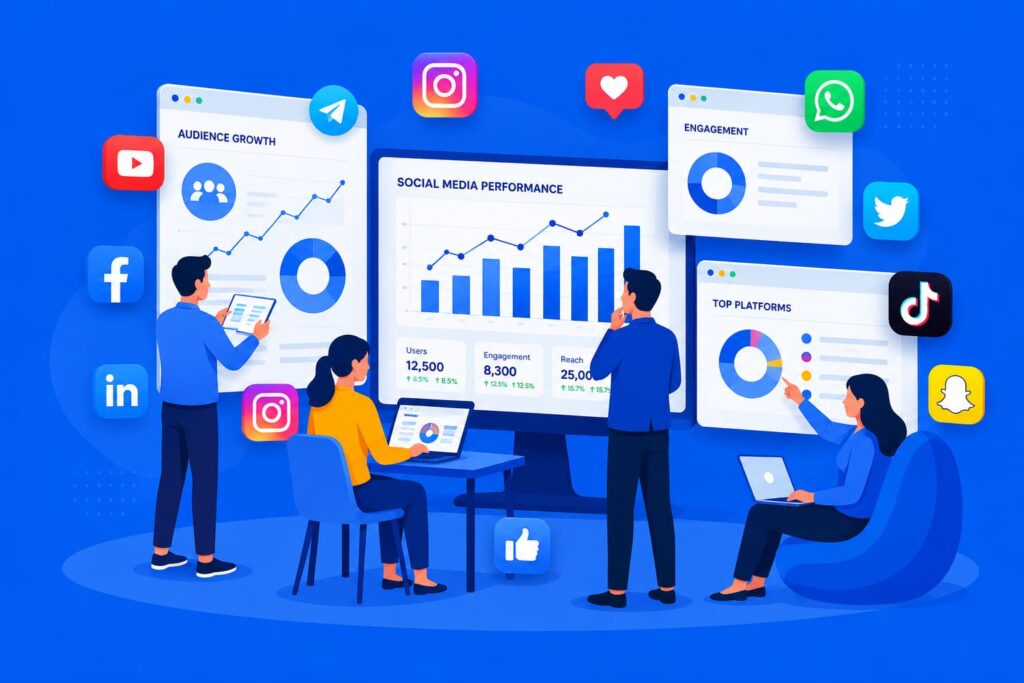
Measuring Social Media Success
Tracking performance is essential for improving results.
Key metrics to monitor include:
Reach
Impressions
Engagement Rate
Click-Through Rate (CTR)
Follower Growth
Website Traffic
Lead Generation
Conversion Rate
Regular analysis helps identify successful strategies and areas for improvement.
Common Social Media Marketing Mistakes to Avoid
Posting without a strategy
Ignoring audience engagement
Over-promoting products
Using poor-quality visuals
Inconsistent posting schedules
Failing to track performance metrics
Targeting the wrong audience
Avoiding these mistakes can significantly improve campaign effectiveness.
Future Trends in Social Media Marketing
As technology evolves, businesses should prepare for emerging trends, including:
AI-powered content creation
Social commerce and in-app shopping
Personalized customer experiences
Influencer marketing partnerships
Short-form video content
Community-focused marketing
Businesses that adapt to these trends will gain a competitive advantage in the years ahead.
Conclusion
Social media marketing has become an essential growth channel for small businesses. It provides opportunities to increase visibility, engage with customers, build trust, and generate sales without requiring massive advertising budgets.
By selecting the right platforms, creating valuable content, maintaining consistency, and monitoring performance, small businesses can build a strong online presence and achieve long-term success. The key is to focus on providing value, fostering relationships, and continuously adapting to changing consumer behaviors and platform trends.