
Search is changing. People are no longer using Google only to find a list of websites. They are increasingly asking AI-powered tools such as ChatGPT, Gemini, and Google AI Search to summarize information, compare options, answer questions, and recommend solutions.
For businesses and SEO professionals, this creates a new opportunity: optimizing content for AI-powered search while continuing to follow traditional SEO best practices.
This is where SEO, AEO, and GEO come together.
SEO helps search engines discover and rank your website. AEO focuses on providing direct answers to questions. GEO, or Generative Engine Optimization, focuses on making content clear, useful, trustworthy, and understandable for generative AI search experiences.
The goal is not to write content only for AI. The goal is to create high-quality content that works for people and can also be clearly understood by search and AI systems.
What Is AI Search Optimization?
AI search optimization is the process of creating and improving website content so that search engines and AI-powered search systems can understand the topic, context, expertise, and answers provided on a page.
Traditional search often gives users a list of results.
AI search can provide a synthesized answer with links to supporting sources.
For example, instead of searching:
“best SEO strategies 2026”
a user might ask:
“What are the most effective SEO strategies for a small business in 2026?”
AI search systems can interpret the intent behind the question and provide a more conversational response.
This means your content needs to answer not only keywords but also real questions and related user needs.
Why Should You 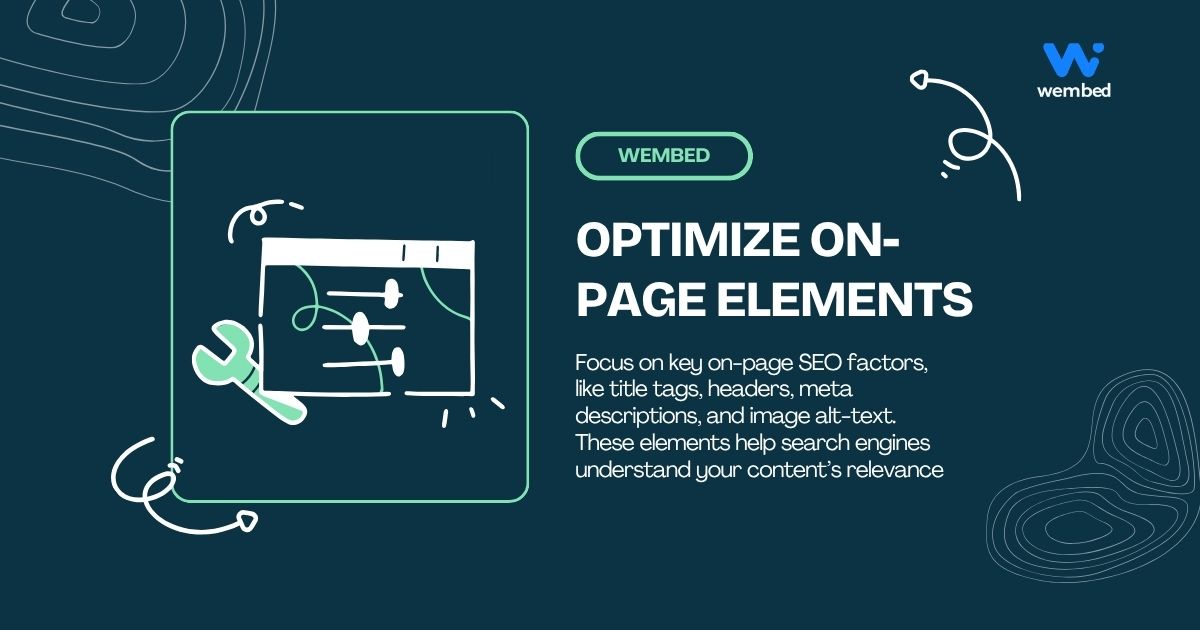 for AI Search?
AI-powered search experiences are becoming an important part of how users discover information.
Google’s guidance for AI Overviews and AI Mode emphasizes creating unique, valuable content for people, maintaining good page experience, and ensuring Google can crawl and index your pages.
ChatGPT Search can also search the web and provide links to relevant sources. OpenAI says there is no guaranteed way to receive top placement in ChatGPT Search, but websites should allow OAI-SearchBot to crawl content they want discovered and surfaced.
This means businesses should build content that is:
Helpful
Original
Accurate
Easy to understand
Well structured
Relevant to search intent
Supported by trustworthy information
Technically accessible
SEO vs AEO vs GEO
Understanding the difference between SEO, AEO, and GEO is important when building an AI-ready content strategy.
| Strategy | Main Purpose | Content Approach |
|---|---|---|
| SEO | Improve visibility in search engines | Keywords, technical SEO, links, useful content |
| AEO | Answer questions directly | Concise answers, FAQs, conversational queries |
| GEO | Improve visibility in generative search | Clear, authoritative, contextual and useful content |
These strategies should not be treated as three completely separate activities.
A strong article can be optimized for SEO + AEO + GEO at the same time.
How to Optimize Content for ChatGPT, Gemini and Google AI Search
There is no single trick or guaranteed formula that makes a website appear in every AI search result.
Instead, focus on creating content that clearly satisfies the user’s intent and gives search systems strong information to understand.
1. Start With Search Intent
Before writing an article, identify what the user actually wants.
For example, someone searching:
“What is GEO?”
probably wants an explanation.
Someone searching:
“How to optimize content for GEO?”
wants practical steps.
Someone searching:
“SEO vs AEO vs GEO”
wants a comparison.
Someone searching:
“best SEO agency for small business”
has commercial intent.
Your content should match the intent behind the query rather than simply repeating the target keyword.
2. Use Conversational Questions
AI search users often ask questions in natural language.
Instead of targeting only:
AI SEO
include related questions such as:
What is AI SEO?
How does AI search work?
How can I optimize content for AI search?
How can my website appear in ChatGPT Search?
How does SEO work with Google AI Overviews?
What is the difference between SEO and GEO?
Does traditional SEO still matter for AI search?
This creates a stronger topical structure and helps answer multiple related search intents.
3. Give a Direct Answer First
One of the simplest ways to make content easier to understand is to answer the question immediately.
For example:
How do you optimize content for AI search?
You optimize content for AI search by creating original, helpful, well-structured information that directly answers user questions, demonstrates expertise, uses trustworthy sources, and follows strong technical SEO practices.
Then provide the detailed explanation.
This approach is useful for both users and answer-oriented search experiences.
4. Build Topic Depth Instead of Keyword Repetition
Don’t repeat the same keyword throughout an article.
Instead, cover the topic from different useful angles.
For example, an article targeting AI SEO could naturally discuss:
AI search
Google AI Overviews
ChatGPT Search
Gemini
AEO
GEO
Search intent
Long-tail keywords
Entity optimization
Internal linking
Structured data
E-E-A-T
Technical SEO
Content quality
This creates a more complete resource for the reader.
5. Add Original Information
Original information can make your content more valuable than another generic article.
Consider adding:
Original research
Case studies
First-hand experience
Expert opinions
Examples
Screenshots
Industry data
Comparisons
Step-by-step processes
Results from your own campaigns
Google specifically recommends unique, satisfying content that adds value rather than commodity content that simply repeats what is already available.
6. Demonstrate E-E-A-T
E-E-A-T stands for:
Experience
Expertise
Authoritativeness
Trustworthiness
You can strengthen these signals by showing who created the content, explaining relevant experience, citing reliable sources, and providing accurate information.
For a digital marketing website, for example, you could include:
Author name
Author bio
Years of experience
Relevant certifications
Real SEO examples
Case studies
Reliable references
Trust is particularly important for content users may rely on when making decisions.
7. Use Reliable Sources
AI search systems can use information from multiple sources when generating answers.
Make your claims easy to verify.
For example, when discussing Google’s AI search features, link to official Google documentation rather than relying only on third-party blogs.
Similarly, when discussing ChatGPT Search, use official OpenAI documentation where appropriate.
OpenAI explains that ChatGPT Search provides links to sources so users can explore the original information.
8. Improve Your Website’s Technical SEO
AI optimization does not replace technical SEO.
Your website should still have a strong technical foundation.
Check:
Googlebot access
Indexability
Robots.txt
XML sitemap
Canonical tags
Mobile usability
Page speed
Core Web Vitals
HTTPS
Internal links
Broken links
Proper heading structure
Clean URLs
Google states that pages need to meet its technical requirements so they can be crawled, indexed, and considered for Search, including AI experiences.
9. Make Your Content Easy to Scan
Avoid large blocks of text.
Use:
Short paragraphs
Clear headings
Bullet points
Numbered steps
Tables
Examples
Definitions
FAQs
A reader should be able to quickly find the answer they need.
10. Use Structured Data Correctly
Structured data helps search engines understand certain information on a webpage.
However, structured data should not be treated as a shortcut for AI visibility.
Google recommends that structured data accurately represent content visible on the page and follow its guidelines.
For example, depending on the page, you may consider appropriate structured data such as:
Article
Organization
Product
Breadcrumb
LocalBusiness
Always use the schema type that accurately represents the actual page.
11. Optimize Images and Videos
AI search is becoming increasingly multimodal.
Don’t rely only on text.
Add useful:
Images
Charts
Infographics
Videos
Screenshots
Diagrams
Use descriptive image filenames and accurate alt text.
Google’s guidance specifically recommends supporting textual content with high-quality images and videos for multimodal search experiences.
12. Make Your Content Accessible to ChatGPT Search
If you want your website to be discoverable in ChatGPT Search, technical accessibility matters.
OpenAI states that websites can appear in ChatGPT Search and recommends allowing OAI-SearchBot to crawl content that publishers want surfaced and cited.
Therefore, review your robots.txt configuration and make sure you are not unintentionally blocking relevant pages.
This is different from optimizing for traditional Google rankings. Each search system can have its own crawling, indexing, and retrieval processes.
13. Create Strong Internal Links
Internal linking helps users and search engines discover related content.
For example, an article about AI SEO could naturally link to:
SEO services
Technical SEO
Content marketing
Web development
Google Ads
Social media marketing
Use descriptive anchor text rather than generic phrases such as “click here.”
14. Build Topical Authority
Don’t publish one article about a topic and stop.
Build a group of connected articles.
For example, an AI SEO content cluster could include:
Pillar Page:
AI SEO: Complete Guide
Supporting Articles:
How to Optimize Content for ChatGPT
Google AI Overviews SEO Guide
AEO vs GEO vs SEO
What Is Generative Engine Optimization?
How to Create AI-Friendly Content
AI SEO Tools for Marketers
How AI Is Changing Keyword Research
Zero-Click Search and SEO
Link these articles together naturally.
This helps create a stronger topical ecosystem around AI search.
How to Optimize a Blog for ChatGPT, Gemini and Google AI Search
Use this simple workflow when publishing a new article.
Step 1: Choose One Primary Topic
Select one clear search intent.
Example:
How to Optimize Content for AI Search
Step 2: Research Related Questions
Find questions users ask about the topic.
Step 3: Create a Detailed Outline
Organize the questions into logical sections.
Step 4: Answer Important Questions Clearly
Give concise answers before detailed explanations.
Step 5: Add Original Value
Include examples, experience, data, or practical recommendations.
Step 6: Add Trust Signals
Include author information, references, and relevant expertise.
Step 7: Optimize On-Page SEO
Optimize:
Title
Meta title
Meta description
URL
Headings
Images
Internal links
Alt text
Step 8: Check Technical SEO
Make sure the page can be crawled, indexed, and accessed properly.
Step 9: Add Appropriate Structured Data
Use only schema that accurately represents the visible content.
Step 10: Monitor Performance
Track:
Organic clicks
Impressions
Rankings
Engagement
Conversions
Referral traffic
AI-related referral traffic where available
Don’t judge success only by rankings.
Google recommends looking at the broader value of visits, including conversions, signups, engagement, and other meaningful outcomes.
What Should You Avoid in AI SEO?
AI search optimization does not mean manipulating AI systems.
Avoid:
Keyword Stuffing
Don’t repeatedly insert keywords into every paragraph.
Fake Expertise
Don’t claim experience, qualifications, or results that you don’t actually have.
Mass AI-Generated Content
Don’t publish hundreds of automatically generated pages without adding meaningful value.
Google states that using generative AI to produce many pages without adding value may violate its scaled content abuse policies.
Unsupported Claims
Avoid statements such as:
“Use these five words and ChatGPT will rank your website.”
There is no guaranteed formula for getting cited or recommended by an AI search system.
Writing Only for AI
Your content should first be useful to humans.
Clear, natural, helpful writing is more valuable than awkward text designed around assumptions about how an AI system might interpret it.
Can You Guarantee That ChatGPT or Gemini Will Mention Your Website?
No.
There is no guaranteed method for making ChatGPT, Gemini, or Google AI Search cite a particular website.
OpenAI states that ChatGPT Search ranking is based on factors intended to provide relevant and reliable results, and there is no way to guarantee top placement.
The better strategy is to build a website that consistently provides:
Relevant information
Original insights
Strong expertise
Reliable sources
Clear answers
Good user experience
Strong technical SEO
Does Traditional SEO Still Matter for AI Search?
Yes.
AI search does not make traditional SEO irrelevant.
Google’s current guidance specifically says established SEO best practices remain relevant to its generative AI experiences.
Technical SEO, crawlability, indexing, content quality, internal linking, page experience, and useful information remain important foundations.
The difference is that modern SEO needs to consider more search interfaces and more conversational user behavior.
SEO + AEO + GEO: The Future of Search Optimization
A modern SEO strategy can be viewed as three connected layers:
SEO → Get discovered
Focus on crawlability, indexing, search intent, keywords, technical SEO, content, links, and website experience.
AEO → Get understood as an answer
Focus on questions, direct answers, concise explanations, FAQs, and conversational search intent.
GEO → Become a useful source for generative search
Focus on original information, expertise, context, credibility, clear structure, and content that can be understood and referenced by AI-powered search systems.
Together:
SEO + AEO + GEO = A stronger AI-ready search strategy.
Frequently Asked Questions
How do I optimize my website for ChatGPT Search?
Create useful, original content that directly answers user questions and ensure your website is technically accessible. OpenAI also recommends allowing OAI-SearchBot to crawl content you want discovered and surfaced in ChatGPT Search.
How do I optimize content for Google AI Overviews?
Focus on unique, helpful content, strong page experience, technical accessibility, and accurate structured data. Google says its existing SEO fundamentals continue to apply to AI search experiences.
How do I optimize content for Gemini?
Focus on the same fundamental principles: useful and original content, clear answers, strong topical relevance, trustworthy information, and solid technical SEO. There is no guaranteed Gemini-specific ranking trick.
Is GEO different from SEO?
Yes. SEO is the broader discipline of improving visibility in search engines, while GEO focuses specifically on optimizing content for generative AI search experiences. The strategies overlap significantly.
Does AI-generated content hurt SEO?
Not automatically. Google focuses on the quality, accuracy, relevance, and value of content rather than simply whether AI was involved. However, generating large amounts of low-value content without adding value can violate Google’s spam policies.
Can I rank on Google and appear in ChatGPT at the same time?
Yes. The same high-quality content can potentially receive visibility across multiple search experiences, but each platform uses its own systems and there is no guarantee of placement.
Conclusion
The future of search is becoming more conversational, personalized, and AI-driven.
But optimizing for AI search does not mean abandoning traditional SEO.
The strongest approach is to create people-first content that answers real questions, provides original value, demonstrates expertise, uses reliable information, and has a technically strong website.
By combining SEO, AEO, and GEO, businesses can prepare their content for traditional search results as well as emerging AI-powered search experiences such as ChatGPT Search and Google’s AI features.
The goal is simple:
Create content that people want to read, search engines can understand, and AI systems can confidently use as a useful source.
If you’re ready to grow your business online, Wembed can help you every step of the way. From building high-performing websites with our Web Development Services, increasing qualified traffic through SEO Optimization Services, generating more leads with Google & Social Media Ads, to strengthening your brand with Social Media Marketing Services, our team delivers complete digital solutions tailored to your goals. Get your free website audit today and discover where you’re losing potential customers—and how to turn more visitors into paying clients.