


How to Perform a Professional SEO Audit: The Complete Step-by-Step Guide (2026)
Every website owner wants higher Google rankings, more organic traffic, and better conversions. However, even the best-designed websites can lose visibility if hidden SEO issues go unnoticed. Broken links, slow loading pages, duplicate content, poor internal linking, or indexing problems can prevent your website from reaching its full potential.
This is where a professional SEO audit becomes essential.
An SEO audit is like a complete health check-up for your website. It helps identify technical issues, content gaps, user experience problems, and optimization opportunities that affect search engine rankings.
Whether you’re managing a business website, an eCommerce store, a blog, or a corporate site, conducting regular SEO audits ensures your website remains optimized according to Google’s latest best practices.
In this guide, you’ll learn exactly how SEO professionals audit websites—from technical SEO and content optimization to backlinks and AI search readiness.
🔹 Quick Answer: What Is an SEO Audit?
An SEO audit is the process of evaluating a website’s technical setup, content quality, on-page optimization, off-page authority, and user experience to identify issues that may prevent it from ranking well in search engines.
A professional SEO audit helps you:
- Improve Google rankings
- Increase organic traffic
- Fix technical SEO errors
- Optimize website performance
- Enhance user experience
- Strengthen website authority
- Prepare your site for AI-powered search engines
Think of an SEO audit as a roadmap that shows exactly what needs improvement and how to prioritize those improvements.
🔹 Table of Contents
- What Is an SEO Audit?
- Why Is an SEO Audit Important?
- Types of SEO Audits
- Professional SEO Audit Checklist
- Technical SEO Audit
- On-Page SEO Audit
- Content Audit
- Keyword Audit
- Internal Linking Audit
- Image SEO Audit
- Core Web Vitals Audit
- Backlink Audit
- Local SEO Audit
- AI SEO (AEO & GEO)
- Best SEO Audit Tools
- Common SEO Audit Mistakes
- Frequently Asked Questions
- Conclusion
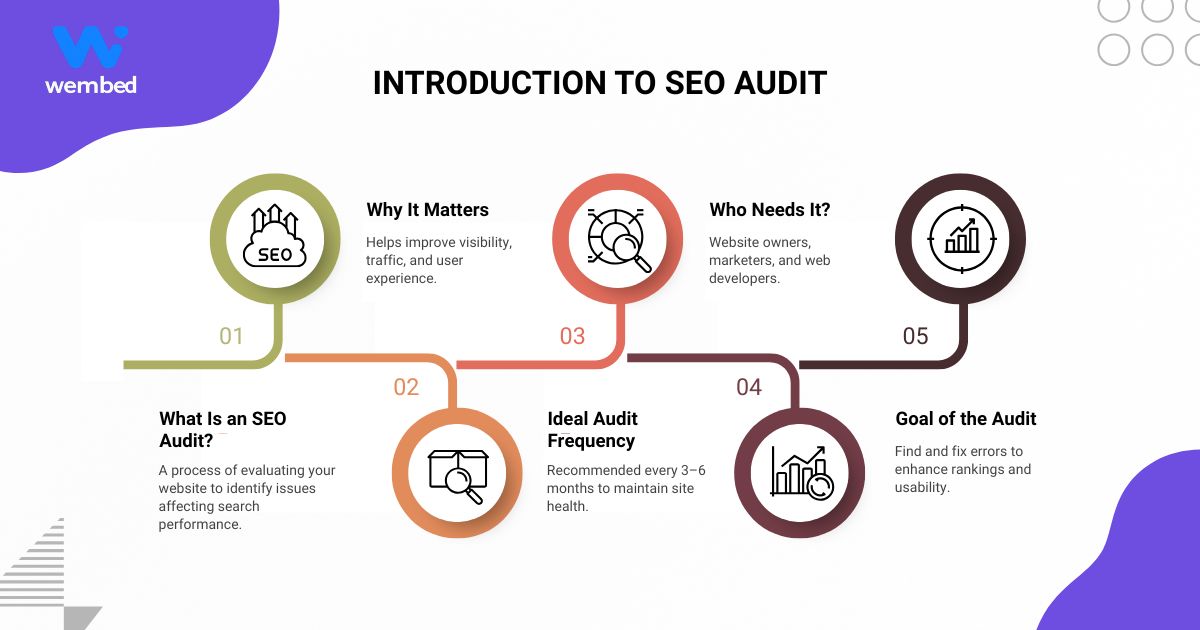
🔹 What Is an SEO Audit?
An SEO audit is a comprehensive evaluation of your website’s ability to perform well in search engines. Instead of focusing on a single issue, it examines every factor that influences visibility—from page speed and mobile usability to keyword optimization and backlinks.
A professional audit answers questions such as:
- Can Google crawl and index every important page?
- Are pages optimized for the right keywords?
- Does the content satisfy user intent?
- Is the website fast and mobile-friendly?
- Are there broken links or duplicate pages?
- Does the site demonstrate expertise and trustworthiness?
- Is the content easy for AI systems like ChatGPT, Gemini, and Perplexity to understand?
By answering these questions, you can prioritize fixes that deliver the greatest SEO impact.
🔹 Why Is an SEO Audit Important?
Search engine algorithms change constantly. A website that ranked well a year ago may lose visibility if it isn’t maintained.
Regular SEO audits help you stay competitive by identifying problems before they affect traffic and conversions.
Key Benefits of an SEO Audit
- Detects technical issues that block search engines.
- Improves website speed and Core Web Vitals.
- Enhances user experience across devices.
- Finds opportunities to improve keyword targeting.
- Identifies thin or outdated content.
- Strengthens internal linking.
- Uncovers broken links and crawl errors.
- Evaluates backlink quality.
- Supports better visibility in AI-generated search results.
Performing an SEO audit at least every six months helps ensure your website remains aligned with current best practices.
🔹 Types of SEO Audits
A complete SEO audit consists of several specialized audits. Each one focuses on a different aspect of your website.
Technical SEO Audit
This audit evaluates the technical health of your website.
It includes:
- Crawlability
- Indexability
- XML Sitemap
- Robots.txt
- HTTPS Security
- Canonical Tags
- Core Web Vitals
- Mobile Friendliness
- Structured Data
- Page Speed
On-Page SEO Audit
This audit reviews the optimization of individual pages.
It covers:
- Title Tags
- Meta Descriptions
- Heading Structure
- URL Optimization
- Keyword Placement
- Image Optimization
- Internal Linking
- Content Quality
- Search Intent
- Readability
Off-Page SEO Audit
This evaluates your website’s authority and reputation.
It includes:
- Backlink Profile
- Referring Domains
- Toxic Links
- Brand Mentions
- Guest Posts
- Digital PR
- Competitor Link Analysis
Content Audit
A content audit evaluates whether your existing content remains valuable and competitive.
It examines:
- Thin Content
- Duplicate Pages
- Outdated Articles
- Content Freshness
- Search Intent Alignment
- Keyword Cannibalization
- EEAT Signals
Local SEO Audit
For businesses targeting specific locations, a local SEO audit reviews:
- Google Business Profile
- NAP Consistency
- Local Citations
- Customer Reviews
- Local Landing Pages
- Map Visibility
🔹 SEO Audit vs SEO Analysis
Many people use these terms interchangeably, but they have different purposes.
| SEO Audit | SEO Analysis |
|---|---|
| Finds technical and content issues | Measures performance and trends |
| Focuses on fixing problems | Focuses on understanding results |
| Creates an action plan | Supports strategic decisions |
| Usually performed periodically | Can be performed continuously |
An effective SEO strategy uses both: audits identify issues, while analysis measures progress over time.
🔹 Why SEO Audits Matter in the AI Search Era
Search is no longer limited to traditional search engines. AI assistants such as ChatGPT, Gemini, Microsoft Copilot, and Perplexity increasingly summarize information directly for users.
To remain visible, websites should ensure that content is:
- Structured with clear headings.
- Easy to scan.
- Factually accurate.
- Comprehensive and up to date.
- Written with genuine expertise.
- Focused on answering real user questions.
These practices support Answer Engine Optimization (AEO) and Generative Engine Optimization (GEO), making your content more likely to be surfaced and referenced by AI systems as well as traditional search engines.
If you’re ready to grow your business online, Wembed can help you every step of the way. From building high-performing websites with our Web Development Services, increasing qualified traffic through SEO Optimization Services, generating more leads with Google & Social Media Ads, to strengthening your brand with Social Media Marketing Services, our team delivers complete digital solutions tailored to your goals. Get your free website audit today and discover where you’re losing potential customers—and how to turn more visitors into paying clients.