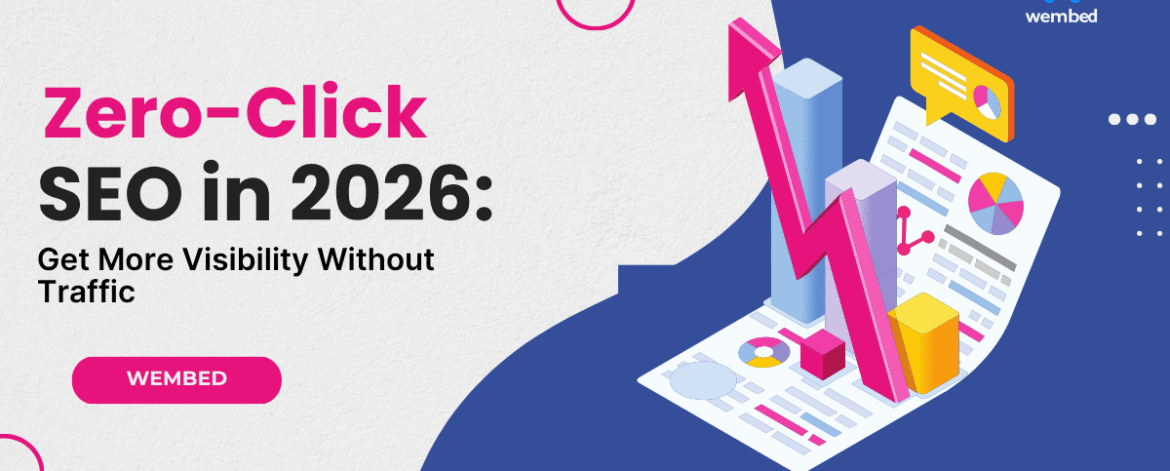
Zero-click SEO is an SEO strategy focused on getting your brand, website, content, or business information visible directly in search results—even when the user does not click a website.
Instead of measuring SEO success only through website visits, zero-click SEO looks at search visibility, brand exposure, SERP features, and answers shown directly on Google.
For example, someone searches for “what is technical SEO?” and Google provides the answer through a featured snippet. The user may get what they need without visiting a website.
This is why zero-click searches have become an important part of modern SEO.
Why Zero-Click Searches Matter in 2026
Search behavior is changing quickly. People increasingly expect quick answers instead of clicking through multiple websites.
Google can provide information through:
- Featured snippets
- AI Overviews
- People Also Ask
- Knowledge panels
- Local results
- Image results
- Video results
- Related searches
This means your website can gain visibility and brand recognition even when it does not receive the click.
The goal is not to avoid traffic. Instead, the goal is to make your brand visible at different stages of the search journey.
Zero-Click SEO vs Traditional SEO
Traditional SEO often focuses heavily on rankings and organic traffic.
Zero-click SEO adds another important question:
“How visible is my brand when people search for information related to my business?”
For example:
| Traditional SEO | Zero-Click SEO |
|---|---|
| Focuses on organic rankings | Focuses on SERP visibility |
| Measures website traffic | Measures visibility and exposure |
| Targets website clicks | Targets answers and brand mentions |
| Focuses on blue links | Focuses on SERP features |
| Traffic is a major KPI | Visibility becomes another KPI |
The strongest SEO strategy in 2026 combines both approaches.
How to Optimize for Zero-Click Searches
1. Answer Questions Directly
Create content that answers real questions clearly and quickly.
For example, instead of writing a long introduction before answering “What is local SEO?”, provide a short definition first and then explain it in detail.
This makes your content easier for search engines and users to understand.
2. Target Featured Snippets
Featured snippets can place your content above traditional organic results.
To improve your chances:
- Answer questions in 40–60 words where appropriate.
- Use clear headings.
- Create numbered steps.
- Use bullet lists.
- Add comparison tables.
- Provide concise definitions.
- Structure content around specific questions.
Don’t write only for search engines. Make the answer genuinely useful for people.
3. Optimize for People Also Ask
People Also Ask (PAA) can expose your content to users searching related questions.
Find questions connected to your main topic and create dedicated sections for them.
For example, a page about zero-click SEO could answer:
- What is zero-click SEO?
- Why are zero-click searches increasing?
- How does zero-click SEO affect traffic?
- How can businesses optimize for zero-click searches?
- Are featured snippets important for SEO?
This creates a more complete resource around the topic.
4. Create Content for AI Search
Search experiences increasingly use AI-generated answers to summarize information from multiple sources.
Your content should therefore be:
- Clear
- Well structured
- Factually accurate
- Easy to understand
- Supported by trustworthy information
- Organized around specific questions
Use descriptive headings and provide direct answers before adding deeper explanations.
5. Build Topical Authority
Publishing one article is rarely enough to establish strong authority.
Create related content around your main topic.
For example, if your website focuses on SEO, you could build a content cluster around:
SEO → Zero-Click SEO → Featured Snippets → AI Search → AEO → GEO → Technical SEO → Local SEO
Then connect these articles through internal links.
This helps users discover related information and creates a stronger topical structure.
6. Optimize for Brand Visibility
Zero-click SEO is also about making your brand recognizable.
When users repeatedly see your:
- Brand name
- Website
- Business information
- Author
- Expert opinions
- Content
- Products or services
across search results, your brand can become more familiar—even if the user doesn’t click every time.
This is especially important for competitive industries.
7. Use Structured Content
Make your content easy to scan.
Use:
- H3 headings
- Short paragraphs
- Lists
- Tables
- FAQs
- Step-by-step instructions
- Definitions
- Examples
Good content structure helps both users and search systems understand the information more easily.
Measuring Zero-Click SEO Success
Website traffic should not be your only SEO KPI.
You can also monitor:
- Search impressions
- Keyword rankings
- Featured snippet visibility
- PAA appearances
- AI search visibility
- Brand searches
- SERP feature ownership
- Organic CTR
- Conversions
A page receiving fewer clicks but significantly more impressions and brand exposure may still be delivering valuable SEO results.
Does Zero-Click SEO Mean Website Traffic Is Dead?
No.
Website traffic is still extremely important.
The difference is that SEO success is becoming broader than simply getting a user to click a blue link.
Think of the search journey like this:
Visibility → Recognition → Trust → Click → Conversion
Zero-click SEO focuses heavily on the first stages, while traditional SEO focuses more on generating clicks.
The best strategy combines both.
Final Thoughts
Zero-click searches are changing how businesses should think about SEO in 2026. Ranking in search results is still important, but being visible wherever users search for information is becoming equally valuable.
By targeting featured snippets, People Also Ask, AI search results, relevant SERP features, and informational queries, businesses can increase their visibility even when users don’t immediately visit their website.
The future of SEO is not just about getting the click. It’s about being seen, being trusted, and becoming the answer.
Grow Your Search Visibility With the Right SEO Strategy
If you want to improve your website’s visibility across Google Search, AI search, and other digital channels, Wembed’s Web Development Services can help you build a search-friendly website and digital strategy designed for long-term growth.
If you’re ready to grow your business online, Wembed can help you every step of the way. From building high-performing websites with our Web Development Services, increasing qualified traffic through SEO Optimization Services, generating more leads with Google & Social Media Ads, to strengthening your brand with Social Media Marketing Services, our team delivers complete digital solutions tailored to your goals. Get your free website audit today and discover where you’re losing potential customers—and how to turn more visitors into paying clients.