

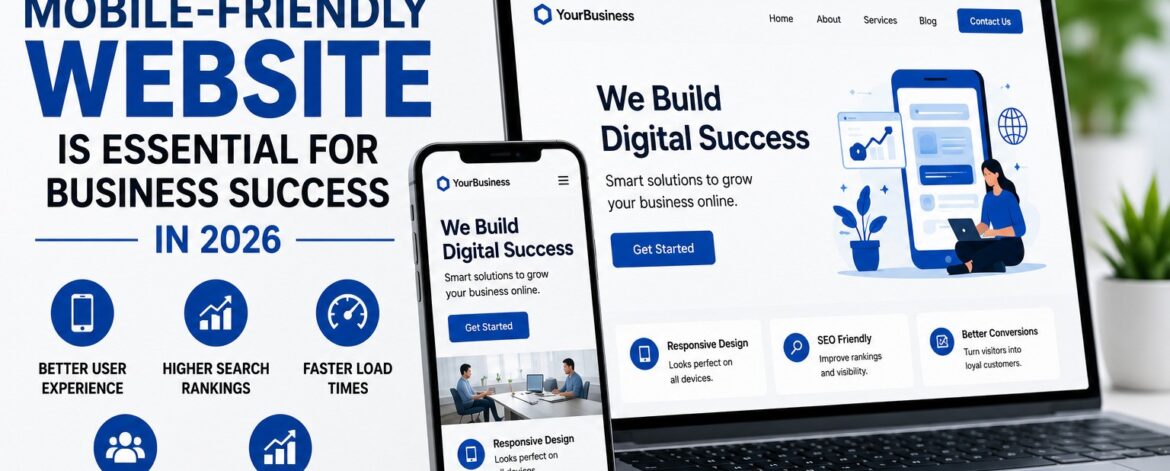
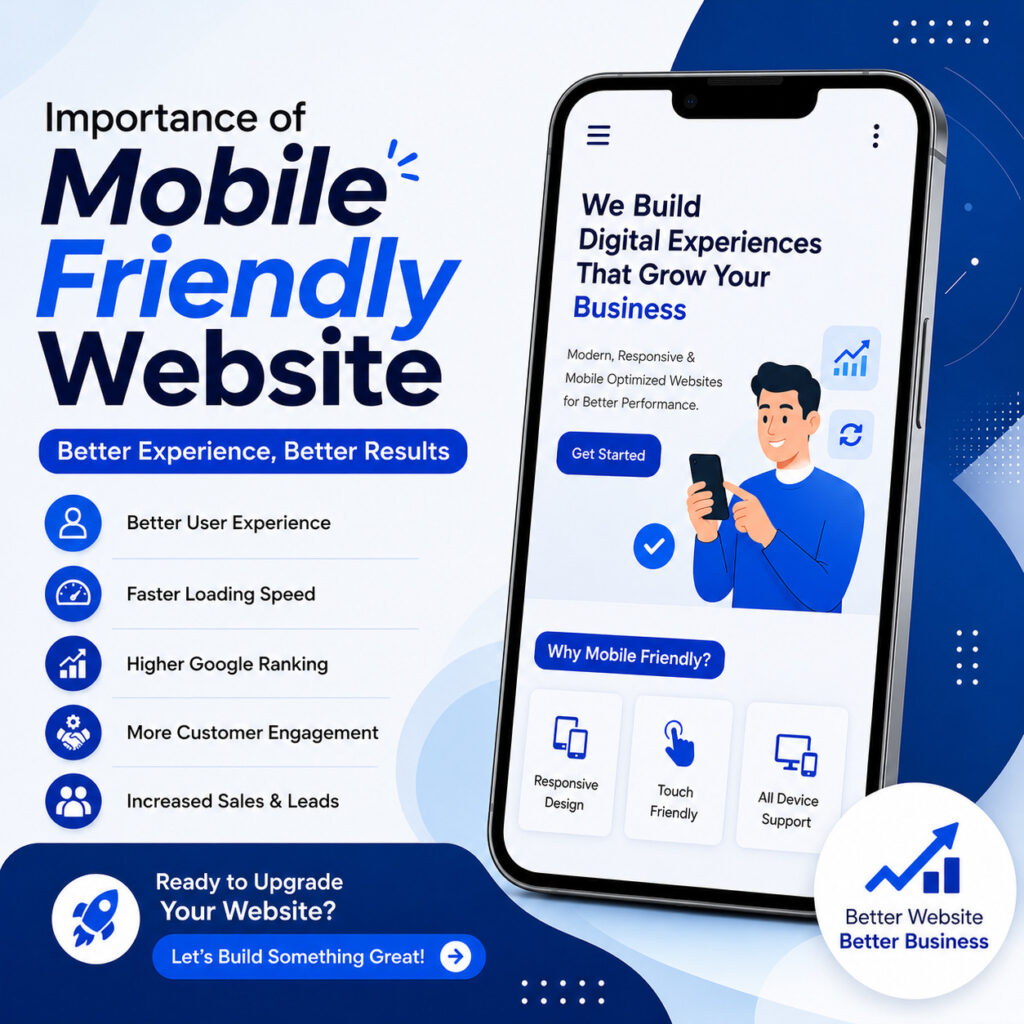
Why Mobile-Friendly Websites Are Essential for Business Success in 2026
The digital landscape has evolved significantly over the past decade, and mobile devices have become the primary way people access the internet. Whether users are shopping online, searching for local businesses, reading reviews, or browsing social media, most of these activities now happen on smartphones and tablets.
For businesses, this shift presents both an opportunity and a challenge. A website that delivers a seamless experience across all devices can attract more visitors, improve customer satisfaction, and drive higher conversions. On the other hand, a website that is difficult to use on mobile devices can frustrate users and lead them directly to competitors.
In today’s competitive market, having a mobile-friendly website is no longer a luxury—it’s a fundamental requirement for long-term business growth.
What Is a Mobile-Friendly Website?
A mobile-friendly website is designed to automatically adapt its layout, content, and functionality to fit different screen sizes. Whether a visitor accesses your website from a smartphone, tablet, laptop, or desktop computer, the experience remains smooth, consistent, and easy to navigate.
Mobile-friendly websites feature responsive layouts, readable text, optimized images, touch-friendly buttons, and fast loading speeds. These elements work together to create a positive user experience that keeps visitors engaged.
Why Mobile Optimization Matters More Than Ever
Consumer behavior has changed dramatically. Modern users expect websites to load quickly and function flawlessly on their mobile devices. Studies consistently show that visitors are likely to leave a website if it takes too long to load or if they struggle to navigate the content.
Additionally, search engines like Google prioritize mobile-friendly websites when determining search rankings. Businesses that fail to optimize for mobile risk losing both visibility and potential customers.
Key Benefits of a Mobile-Friendly Website
1. Enhanced User Experience
User experience plays a critical role in determining whether visitors stay on your website or leave. A mobile-friendly design ensures that content is easy to read, navigation is intuitive, and users can quickly find the information they need.
When visitors enjoy a smooth browsing experience, they are more likely to engage with your content, explore your services, and return in the future.
2. Improved Search Engine Rankings
Google uses mobile-first indexing, which means it primarily evaluates the mobile version of a website when determining rankings. Websites that perform well on mobile devices are more likely to achieve higher positions in search results.
Better rankings increase visibility, attract more organic traffic, and help businesses reach potential customers at the exact moment they are searching for relevant products or services.
3. Faster Website Performance
Speed is one of the most important factors affecting both user experience and SEO performance. Mobile-friendly websites are typically optimized for faster loading times through image compression, responsive frameworks, and efficient coding practices.
A faster website reduces bounce rates and encourages visitors to stay longer, increasing the likelihood of conversions.
4. Higher Conversion Rates
Whether your goal is generating leads, selling products, or booking appointments, mobile optimization can significantly impact conversion rates. Visitors are more likely to complete actions when forms, buttons, and checkout processes are simple and accessible on mobile devices.
A streamlined user journey helps remove obstacles and encourages customers to take the next step.
5. Increased Brand Credibility
A modern, responsive website creates a professional impression and builds trust with potential customers. Businesses with outdated or poorly functioning mobile websites may appear less reliable compared to competitors that offer a polished digital experience.
First impressions matter, and your website often serves as the first interaction customers have with your brand.
6. Competitive Advantage
Many businesses still overlook the importance of mobile optimization. By investing in a responsive website, you can differentiate your brand and provide a superior experience that sets you apart from competitors.
A better mobile experience often translates into increased customer retention and stronger brand loyalty.
Best Practices for Creating a Mobile-Friendly Website
To maximize performance and usability, consider implementing the following strategies:
Use responsive website design that adapts automatically to different screen sizes.
Optimize images and videos to improve loading speed.
Keep menus simple and easy to navigate.
Use readable font sizes and adequate spacing.
Design buttons and forms for touch-screen interaction.
Minimize pop-ups that disrupt the user experience.
Test your website regularly across multiple devices and browsers.
Monitor website speed and Core Web Vitals performance.
The Future of Mobile Web Experiences
As mobile technology continues to advance, user expectations will only increase. Emerging technologies such as voice search, AI-powered personalization, and progressive web applications are shaping the future of digital experiences.
Businesses that invest in mobile optimization today will be better positioned to adapt to future trends and maintain a competitive edge in their industry.
Conclusion
A mobile-friendly website is one of the most valuable investments a business can make in today’s digital environment. It improves user experience, strengthens search engine visibility, increases conversion rates, and enhances brand credibility.
As mobile usage continues to grow worldwide, businesses that prioritize responsive design will be better equipped to attract customers, build trust, and achieve sustainable growth. In 2025 and beyond, mobile optimization is not simply a website feature—it’s a critical component of business success.